


West Africa

North Africa
Central Africa
Southern Africa
East Africa
Macroeconomy
Financial Services
Energy & Utilities
Consumer Staples
Consumer Discretionary
Information Technology
Media
Communication Services
Agriculture
Industrials
Healthcare
Real Estate
Election Tracker
Democracy Data
Country Data & History
South African Rand (ZAR)
USD:ZAR
+0.00%
R 16.63
GBP:ZAR
+0.00%
R 22.41
EUR:ZAR
+0.00%
R 19.44

Last Updated:
April 28 2025, 9:00 AM UTC (Opening Rate)
Description

The South African Rand, like other Emerging Market currencies, lost significant value in 2023. The added strain on the country’s currency has come from load-shedding issues. While the South African Rand is expected to continue to lose value this year, the currency’s stability could improve if the upcoming elections improve the electricity situation.
In light of the prevailing uncertainty, South African consumers are anticipated to adopt a deliberate approach to their spending habits. They will likely prioritise strategies aimed at economising without compromising on quality. Consumers are expected to reduce spending across retail categories, except for groceries. Moreover, there is a noticeable surge in environmental consciousness among South African consumers. They are actively seeking out products that prioritise sustainability in their sourcing and production processes. Consequently, there is a growing demand for organic goods, items made from recycled materials, and energy-efficient appliances. Businesses that embrace and adapt to these shifting consumer preferences will be well-positioned to thrive in the South African market.
In light of the prevailing uncertainty, South African consumers are anticipated to adopt a deliberate approach to their spending habits. They will likely prioritise strategies aimed at economising without compromising on quality. Consumers are expected to reduce spending across retail categories, except for groceries. Moreover, there is a noticeable surge in environmental consciousness among South African consumers. They are actively seeking out products that prioritise sustainability in their sourcing and production processes. Consequently, there is a growing demand for organic goods, items made from recycled materials, and energy-efficient appliances. Businesses that embrace and adapt to these shifting consumer preferences will be well-positioned to thrive in the South African market.
Methodology
The Stears Pan-African exchange rate forecasts employ a refined economic model that combines current market data with advanced theoretical underpinnings to predict the official end-point quarterly exchange rates for major African currencies against the US dollar.
At its core, the model establishes a baseline for each currency, factoring in both current and forecasted inflation differentials between the African countries and the US.
To ensure our projections reflect the latest market conditions, we apply a data-driven recalibration. This step is critical in anchoring our forecasts in the present-day financial landscape. We then analyse projected month-on-month inflation rates for each quarter, recognising inflation's pivotal role in currency valuation.
We have also introduced a strategic analytical adjustment – an 'analyst’s premium'. This is a calculated refinement, factoring in market-specific variables and economic indicators not fully encapsulated by baseline inflation differentials. This sophisticated adjustment serves to fine-tune our forecasts, providing users with comprehensive, actionable insights tailored for navigating complex financial markets.
At its core, the model establishes a baseline for each currency, factoring in both current and forecasted inflation differentials between the African countries and the US.
To ensure our projections reflect the latest market conditions, we apply a data-driven recalibration. This step is critical in anchoring our forecasts in the present-day financial landscape. We then analyse projected month-on-month inflation rates for each quarter, recognising inflation's pivotal role in currency valuation.
We have also introduced a strategic analytical adjustment – an 'analyst’s premium'. This is a calculated refinement, factoring in market-specific variables and economic indicators not fully encapsulated by baseline inflation differentials. This sophisticated adjustment serves to fine-tune our forecasts, providing users with comprehensive, actionable insights tailored for navigating complex financial markets.
Data Sources

South Africa Reserve Bank (SARB), Statistics South Africa (SSS)
Similar Datasets
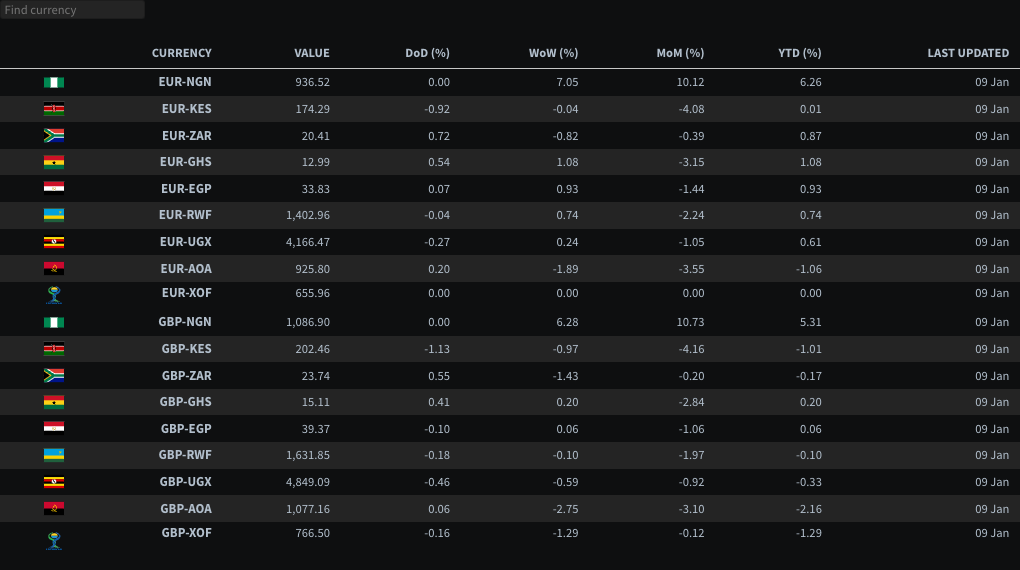
African Currencies

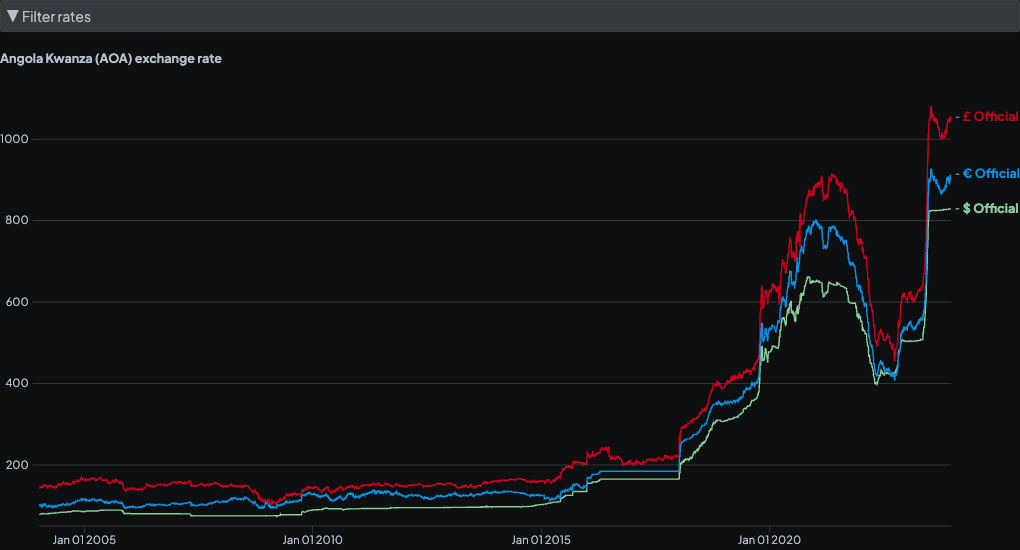
Angolan Kwanza (AOA)
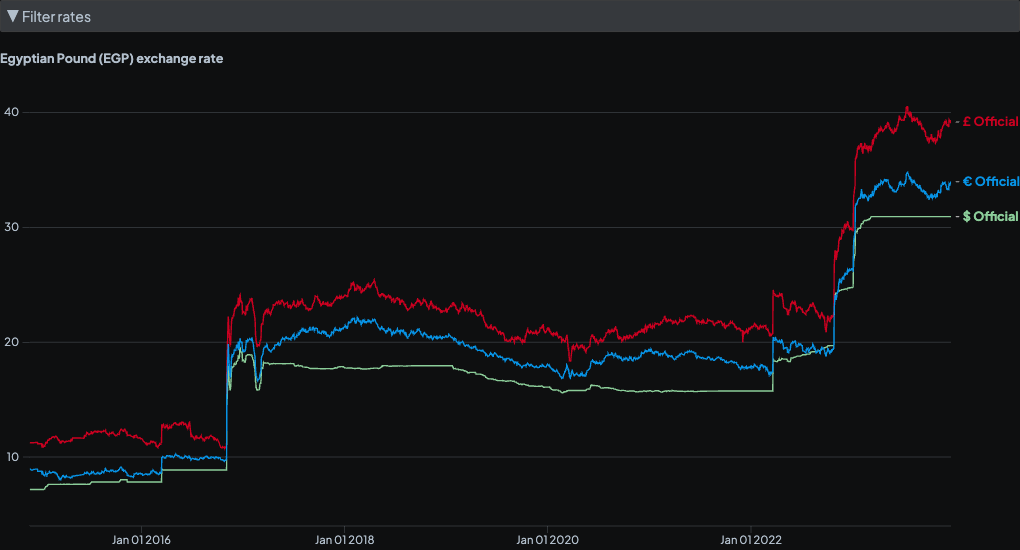
Egyptian Pound (EGP)

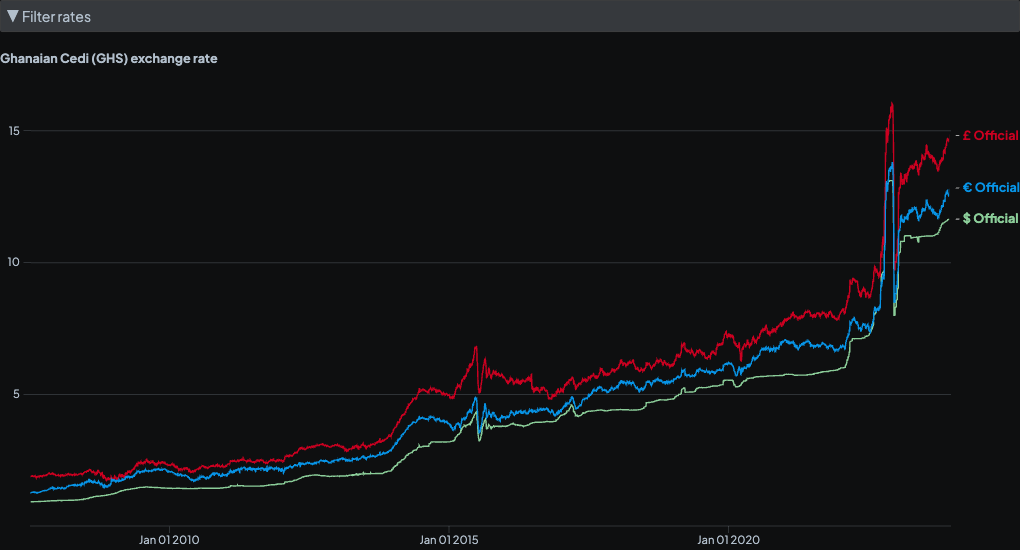
Ghanian Cedi (GHS)
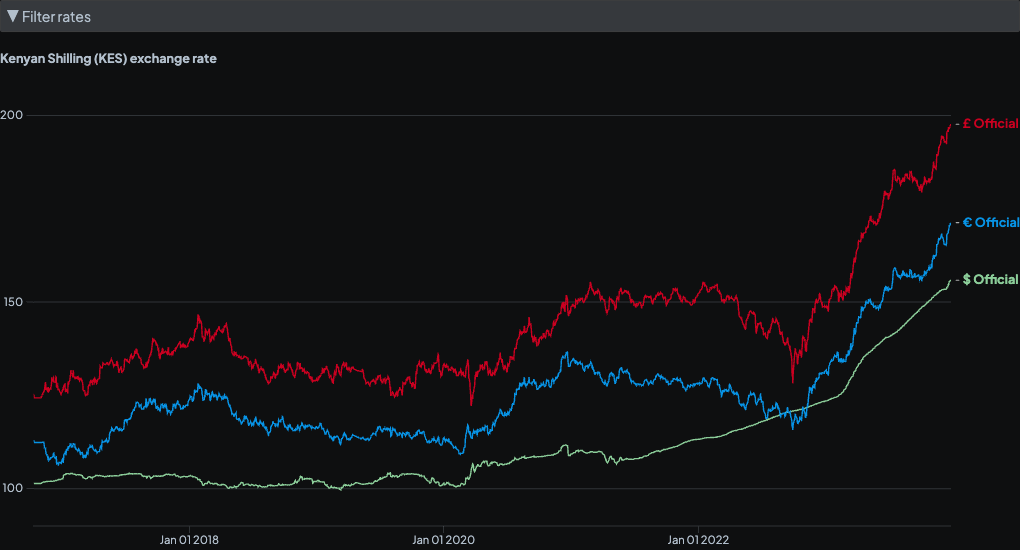
Kenyan Shilling (KES)
.png)
Nigerian Naira (NGN)
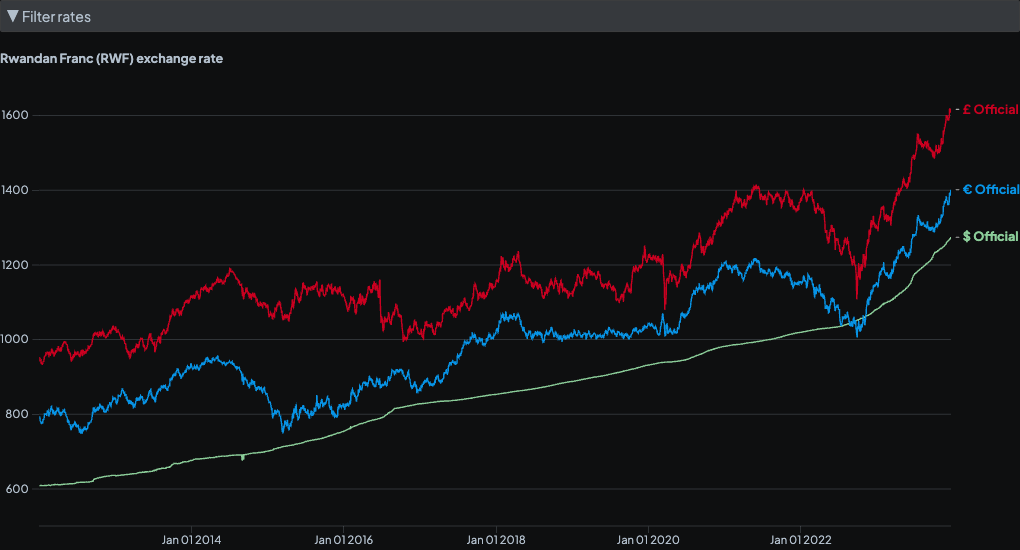
Rwandan Franc (RWF)
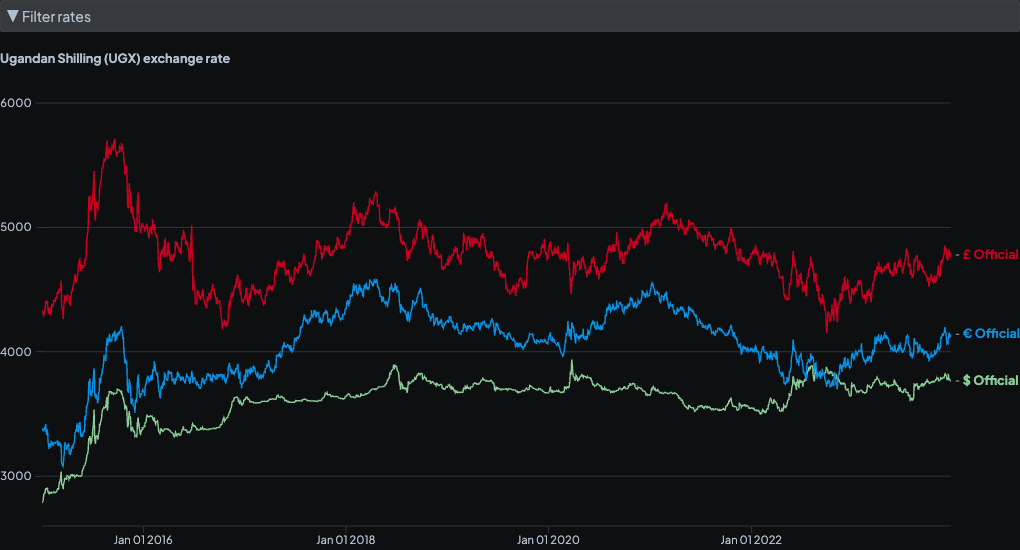
Ugandan Shilling (UGX)
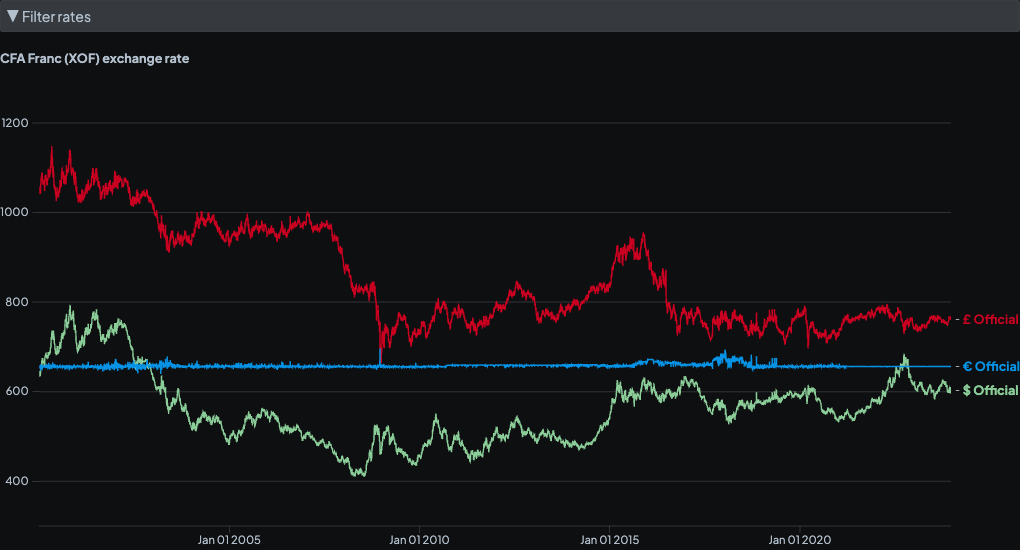
West African CFA frac (XOF)