


West Africa

North Africa
Central Africa
Southern Africa
East Africa
Macroeconomy
Financial Services
Energy & Utilities
Consumer Staples
Consumer Discretionary
Information Technology
Media
Communication Services
Agriculture
Industrials
Healthcare
Real Estate
Election Tracker
Democracy Data
Country Data & History
Nigerian Naira (NGN)
USD:NGN
+0.00%
₦ 1364.24
GBP:NGN
+0.00%
₦ 1847.72
EUR:NGN
+0.00%
₦ 1602.29

Last Updated:
April 28 2025, 9:00 AM UTC (Opening Rate)
|
Sources:
CBN, FMDQ, Stears
Description

Official currency of Nigeria, managed by the Central Bank of Nigeria
Data Sources

Central Bank of Nigeria (CBN), FMDQ, AbokiFX
Description
The Naira is expected to find stability in 2024 after a turbulent 2023. This comes as exchange rate reforms should improve dollar liquidity, and inflation is expected to subside as a result of base effects. While exchange rate reforms and continued dollar shortage have led to a hard start to the year, we expect the market to cool by Q2 2024.
Despite our anticipation of the Naira stabilising by the end of Q2 2024, inflationary pressures which have eroded the value of consumers' incomes, still linger. Low- to middle-income consumers are likely to prioritise essential goods, especially sachet and miniature products, as they navigate the challenges of high inflation. Thus, businesses that adapt their strategies to cater to the needs of this demographic stand to benefit from sustained success. On the other hand, higher-income consumers will seek cost-effective alternatives that still exude a sense of luxury. This behaviour presents an opportunity for businesses to introduce innovative products and services that offer premium quality without the premium price tag. Brands capable of delivering such value propositions are poised to gain a competitive advantage in the market.
Despite our anticipation of the Naira stabilising by the end of Q2 2024, inflationary pressures which have eroded the value of consumers' incomes, still linger. Low- to middle-income consumers are likely to prioritise essential goods, especially sachet and miniature products, as they navigate the challenges of high inflation. Thus, businesses that adapt their strategies to cater to the needs of this demographic stand to benefit from sustained success. On the other hand, higher-income consumers will seek cost-effective alternatives that still exude a sense of luxury. This behaviour presents an opportunity for businesses to introduce innovative products and services that offer premium quality without the premium price tag. Brands capable of delivering such value propositions are poised to gain a competitive advantage in the market.
Methodology
Stears’ exchange rate forecasts methodology implements a sophisticated approach to project the end-point quarterly exchange rates for key African currencies against the US dollar. This method integrates actual and forecasted economic indicators, including inflation rates from both the target African currencies and the US, to ensure comprehensive analysis.
We have meticulously established a realistic baseline for our forecasts, taking into account the most current market conditions. This allows us to provide projections that are not only data-driven but also highly relevant to the current economic landscape.
Crucially, we’ve refined our model to focus on the end-of-quarter month-on-month inflation rates to enhance the precision of our quarterly forecasts. Recognising the limitations of relying solely on quantitative models, we have incorporated an “analyst’s premium” into our forecasts. This additional layer adjusts for market dynamics and other variables not fully captured by standard economic indicators, thereby offering a more nuanced and realistic forecast.
We have meticulously established a realistic baseline for our forecasts, taking into account the most current market conditions. This allows us to provide projections that are not only data-driven but also highly relevant to the current economic landscape.
Crucially, we’ve refined our model to focus on the end-of-quarter month-on-month inflation rates to enhance the precision of our quarterly forecasts. Recognising the limitations of relying solely on quantitative models, we have incorporated an “analyst’s premium” into our forecasts. This additional layer adjusts for market dynamics and other variables not fully captured by standard economic indicators, thereby offering a more nuanced and realistic forecast.
Data Sources
Central Bank of Nigeria (CBN), National Bureau of Statistics (NBS)
Similar Datasets
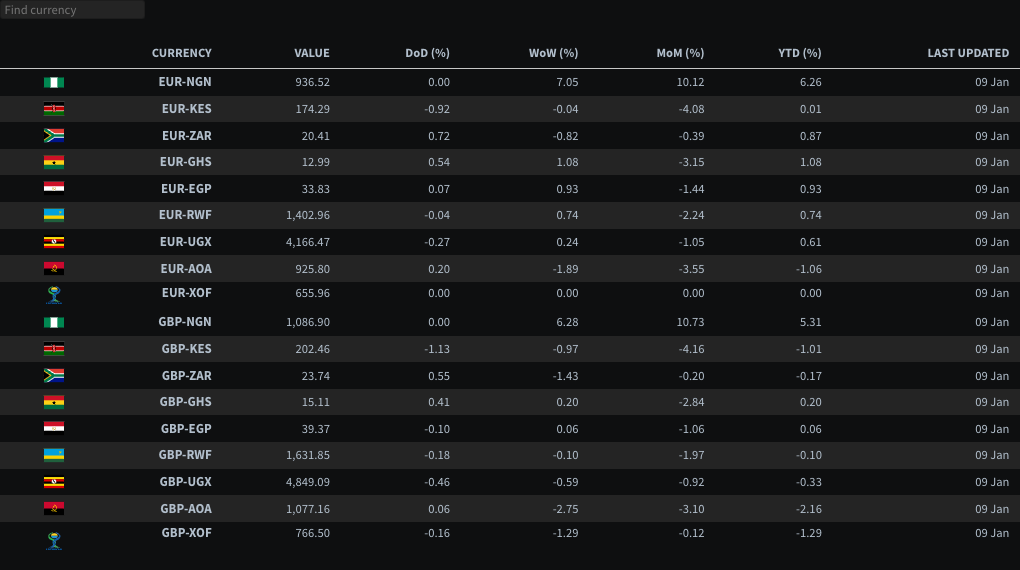
African Currencies

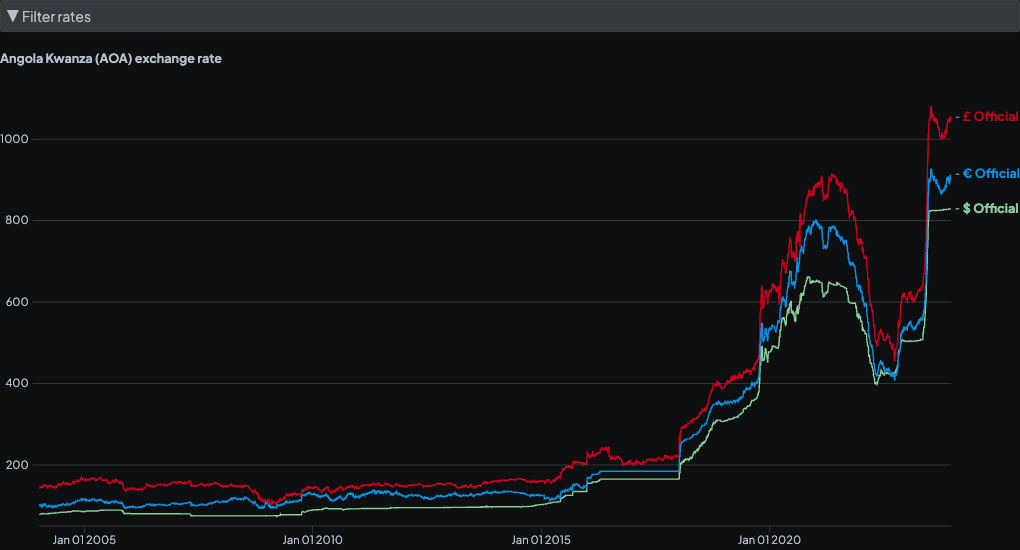
Angolan Kwanza (AOA)
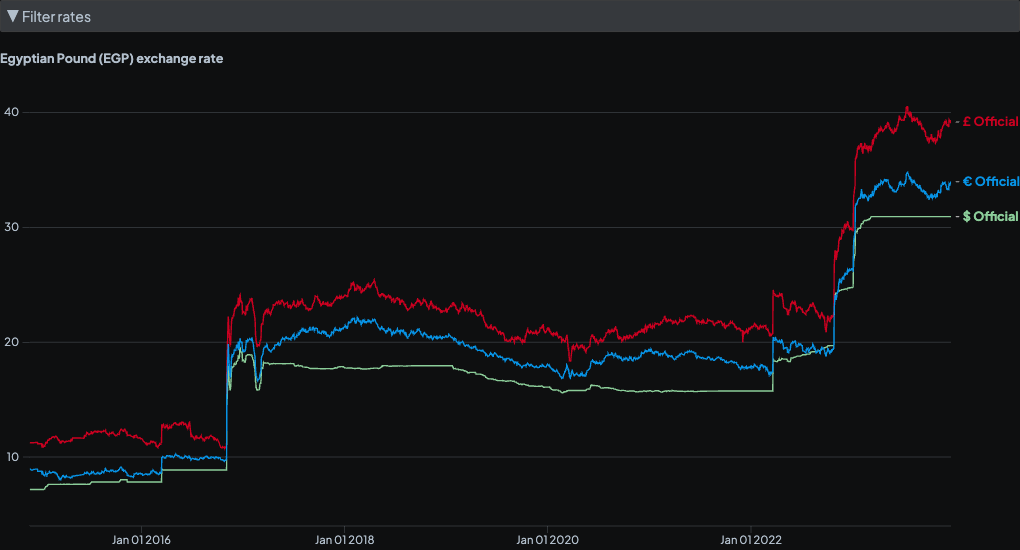
Egyptian Pound (EGP)

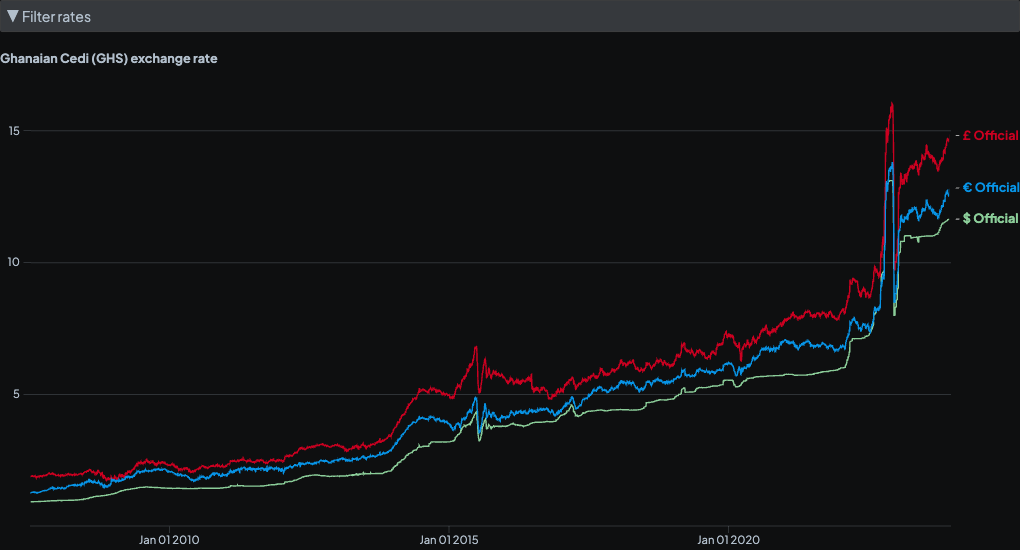
Ghanian Cedi (GHS)
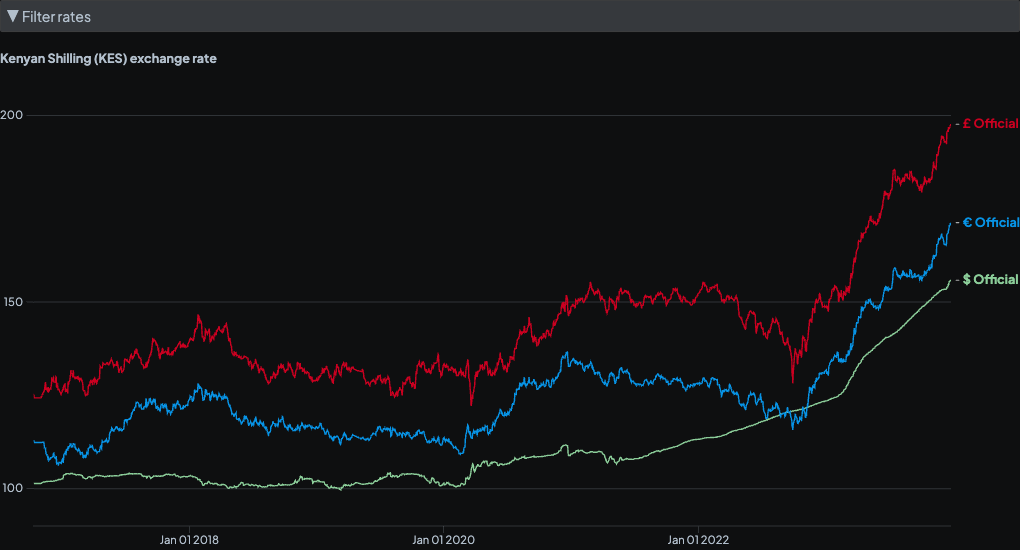
Kenyan Shilling (KES)
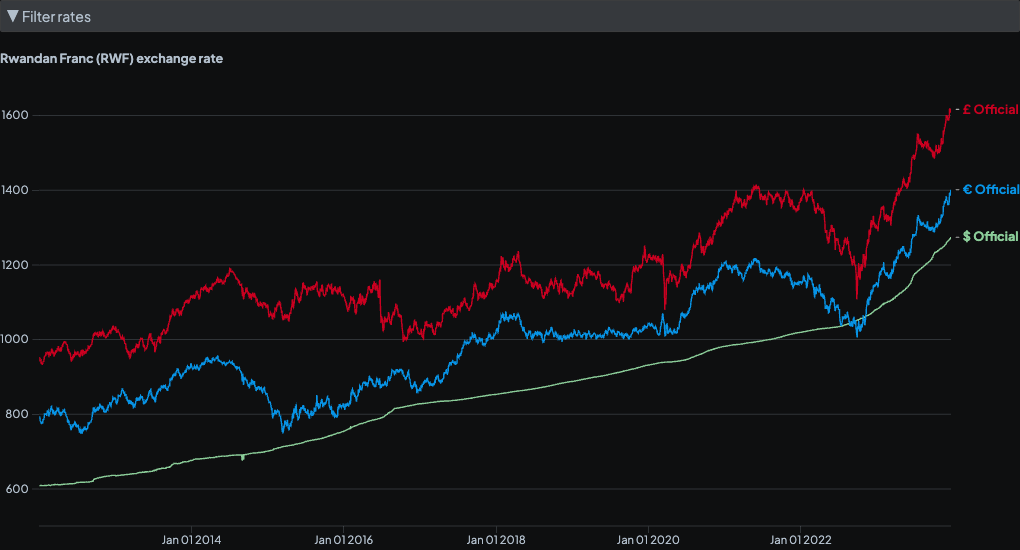
Rwandan Franc (RWF)
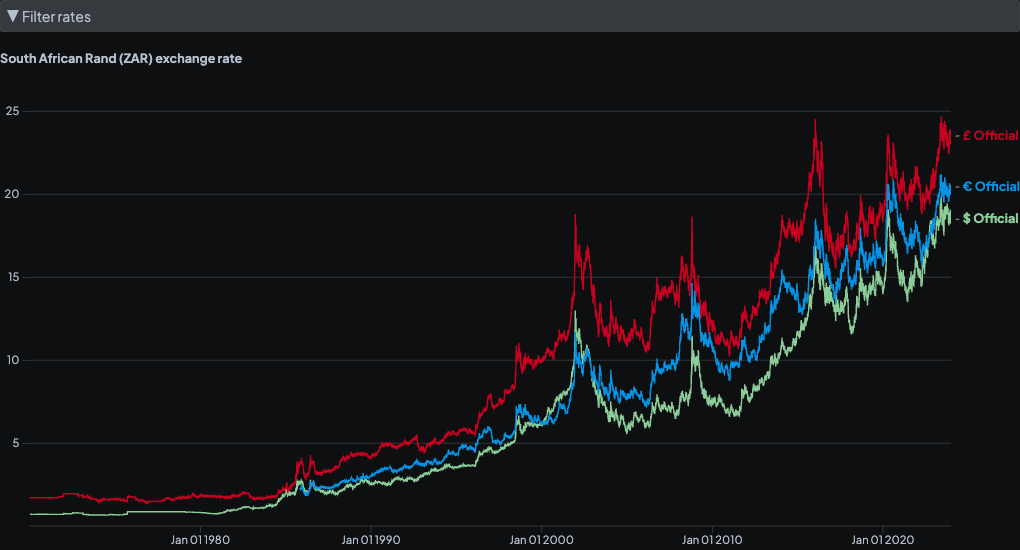
South African Rand (ZAR)
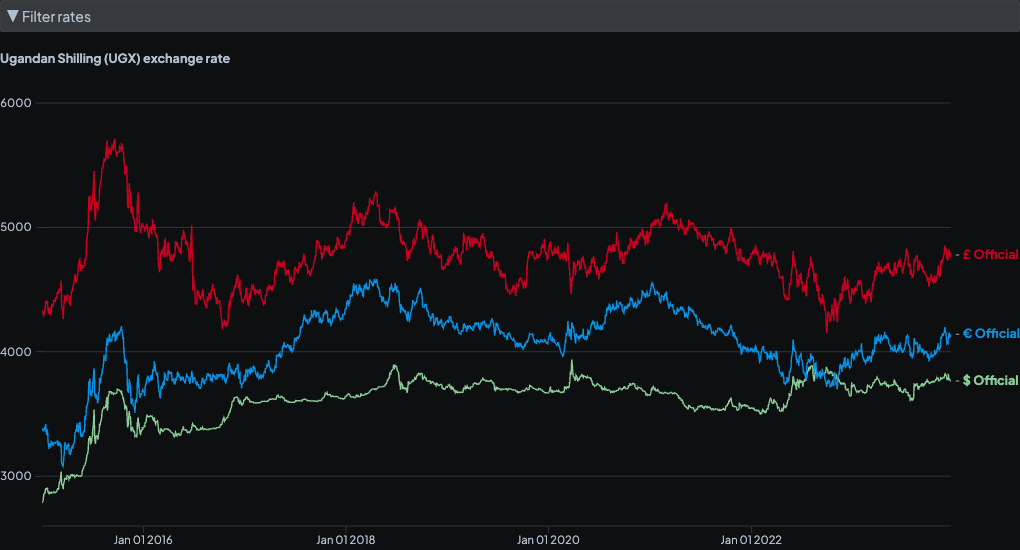
Ugandan Shilling (UGX)
West African CFA frac (XOF)